
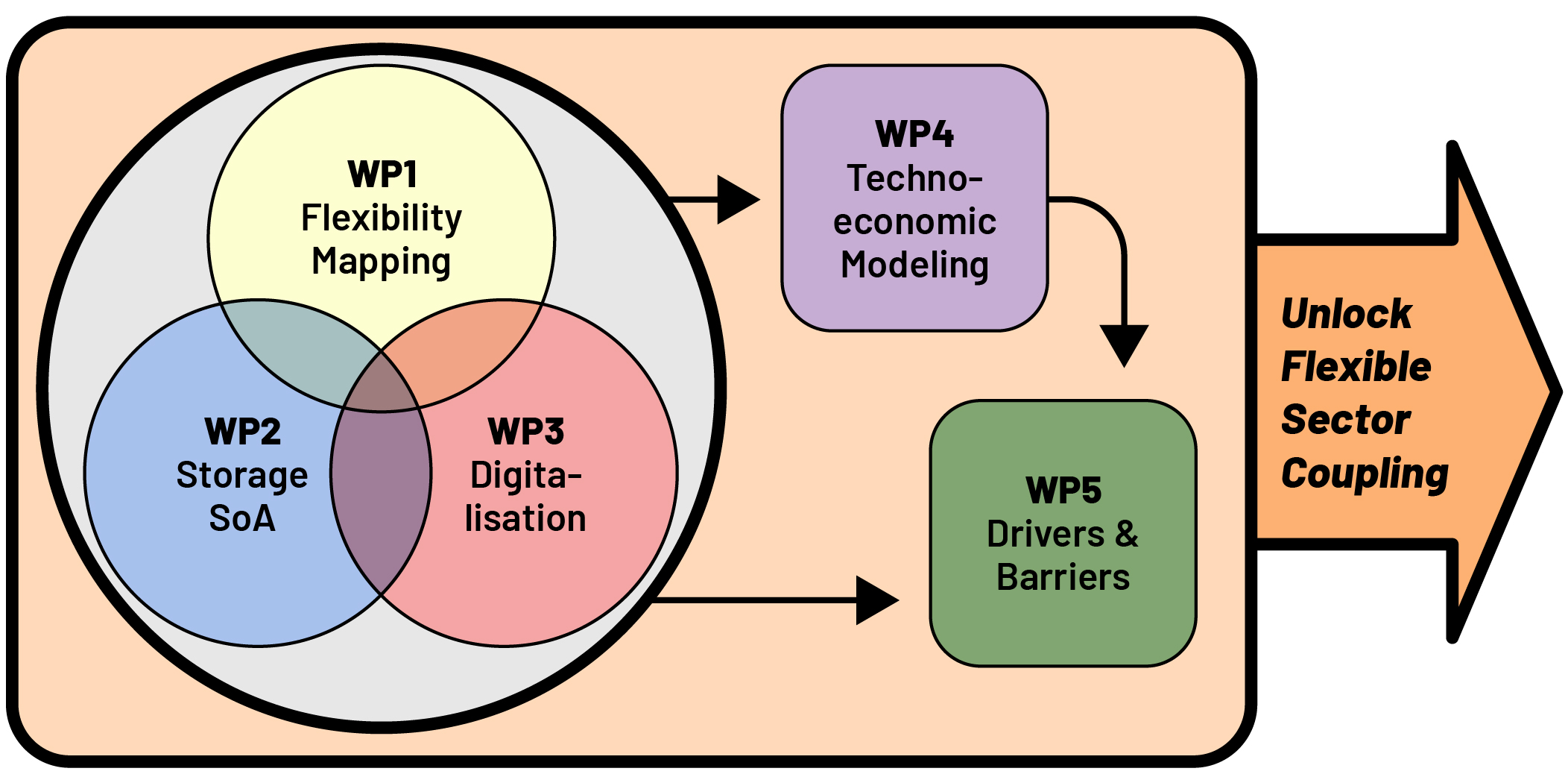
KTH and Dig-IT Lab were recently awarded funding from the Swedish Energy Agency for the cooperative project BESSFlex, to unlock currently underutilised flexibility in the built environment. Saman Nimali Gunasekara is coordinating the project, which includes several Dig-IT Lab and external partners.
About the project
BESSFlex (Building Energy Systems and Storage for Flexible Sector Coupling) will unlock Flexible Sector Coupling (FSC) between electrical and thermal energy sectors, utilising buildings and their energy storages. It synthesises the current state of FSC and unveils the role of buildings, energy storages, renewable energy (RE) sources and digitalisation for electrical-thermal FSC, exemplified by techno-economic analyses highlighting multifaceted drivers, barriers and opportunities. In FSC, energy storage enables flexibility, with heat pumps, electrical heaters, boilers and chillers enabling sector coupling. RE from e.g. photovoltaic (PV) make buildings prosumers.
With increased intermittent wind and solar RE in the electricity grid, buildings as users and prosumers become key distributed FSC hubs. Digitalisation can aid FSC adoption through smart building control and operation. However, today, the building, electrical and thermal sectors are still optimised in silos, restricting the full exploitation of FSC. BESSFlex will bridge these critical gaps.
BESSFlex Partners:
- KTH (Coordinator), Saman Nimali Gunasekara (PI), Nelson Sommerfeldt (Co-applicant)
- RISE AB, Rafael Gómez García
- Vasakronan AB, Nils Rosengren
- Einar Mattsson AB, Mikael Dimadis
- BRF Borggården 99, Johan Marklund
- CheckWatt AB, Dan-Erik Archer,
- Stockholm Exergi AB, Fabian Levihn
Project timeline:
01 January 2026 – 31 December 2028
More information at Energy@KTH
 English